
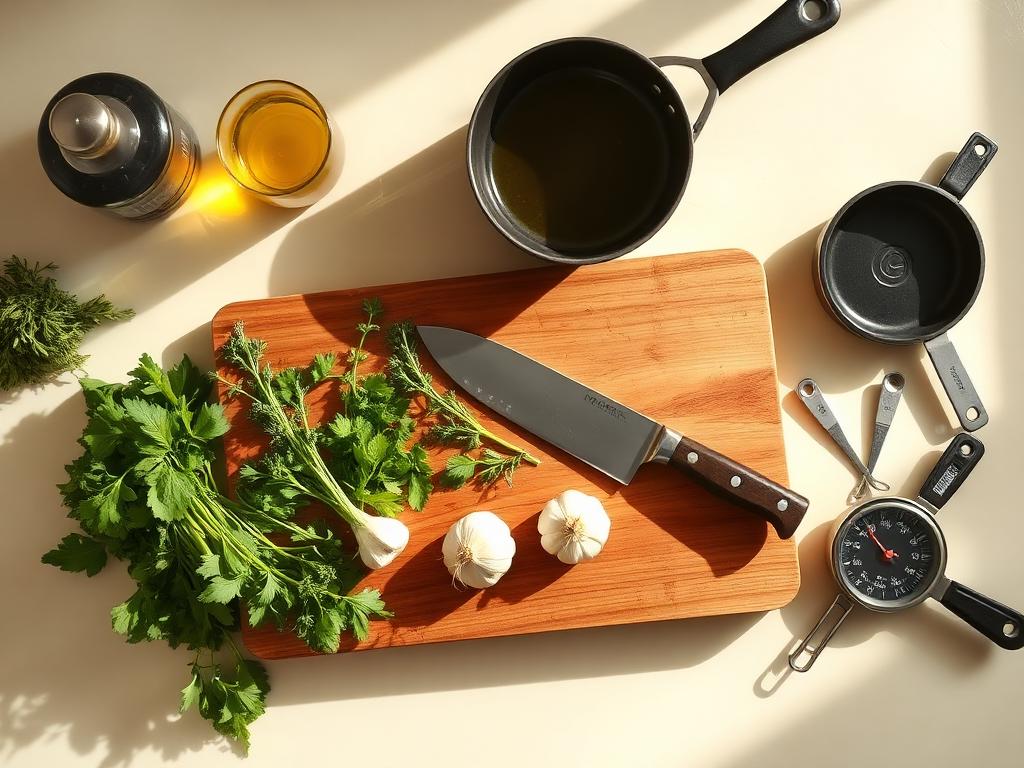
The Basics
Safe Internal Cooking Temperatures
Colour is not a reliable doneness test. An instant-read food thermometer in the thickest part of the meat, away from bone, is the only way to be sure.
- Chicken & turkey (all cuts)
- 165°F / 74°C
- Ground beef, pork, lamb
- 160°F / 71°C
- Beef & lamb steaks, roasts
- 145°F / 63°C, then rest 3 minutes
- Pork chops and roasts
- 145°F / 63°C, then rest 3 minutes
- Fish and shellfish
- 145°F / 63°C, or until opaque and flaking
- Leftovers reheated
- 165°F / 74°C throughout
Temperatures follow standard USDA food-safety guidance for home cooking.
Kitchen Tips
Prep Like a Pro
Most weeknight stress comes from prepping while the pan is already hot. These habits fix that.
Set everything out first
Measure spices, chop vegetables and open cans before you turn on the stove. A 30-minute recipe only takes 30 minutes if the prep is done.
Pat proteins dry
Moisture on the surface steams instead of sears. Blot chicken, steak, shrimp and salmon with paper towel and you will get a deep golden crust every time.
Let meat sit out 15 minutes
Fridge-cold chicken cooks unevenly — the outside overcooks before the centre catches up. Fifteen minutes on the counter is enough; do not leave raw meat out longer than two hours.
Keep the board steady
A damp paper towel under your cutting board stops it sliding, which is the single most common cause of home kitchen cuts.
Kitchen Tips
Heat, Pans and Searing
Pan temperature does more for flavour than any spice blend. Here is how to get it right.
Preheat, then add oil
Heat the empty skillet for 1–2 minutes over medium-high, then add oil. It shimmers within seconds when the pan is ready.
Do not crowd the pan
Leave a finger of space between pieces. Crowded food releases steam and turns grey instead of browning. Cook in two batches — it is faster than fixing pale chicken.
Leave it alone
Protein releases from the pan when the crust has formed. If it sticks when you try to flip it, give it another 30–60 seconds.
Deglaze for instant sauce
After searing, pour in a splash of stock, wine or lemon juice and scrape the browned bits. That is a free pan sauce in under a minute.
Kitchen Tips
Seasoning and Balance
If a dish tastes flat, it is almost always missing salt, acid or fat.
Season in layers
A little salt on the protein, a little in the sauce and a final pinch at the end tastes far better than all the salt added at once.
Finish with acid
A squeeze of lemon or a splash of vinegar at the end lifts creamy pastas, roasted vegetables and rice bowls instantly.
Bloom dried spices
Stir paprika, cumin or chilli flakes into hot oil for 30 seconds before adding liquid. The flavour gets rounder and less dusty.
Salt pasta water properly
About one tablespoon of salt per four litres. Reserve a cup of that starchy water — it is what makes a sauce cling.
Kitchen Tips
Storage, Reheating and Waste
Good storage is what turns one dinner into three easy meals.
Cool before you cover
Let food cool for up to two hours, then refrigerate in shallow airtight containers so it chills quickly and evenly.
Label everything
Write the dish and date on tape. Most cooked leftovers keep 3–4 days in the fridge and 2–3 months frozen.
Reheat gently with moisture
Add a splash of stock, water or milk and reheat covered over low heat. Microwaves work at 50% power in 60-second bursts, stirring between.
Freeze flat
Freeze sauces and cooked proteins flat in zip bags. They thaw in minutes and stack in a fraction of the space.
Kitchen Tips
Common Mistakes and Quick Fixes
Everything below has a rescue — nothing here needs to end in takeaway.
Sauce too thin
Simmer uncovered a few more minutes, or stir in a slurry of one teaspoon cornstarch mixed with one tablespoon cold water.
Sauce too salty
Add unsalted liquid, extra vegetables, cream or a squeeze of lemon. Serve over plain rice or pasta to spread the seasoning out.
Dry chicken breast
Slice it thin, then toss it back into the sauce for a minute. Next time pull it off the heat at 165°F / 74°C measured with a thermometer.
Garlic turned bitter
Garlic burns in under a minute. Add it after the protein is seared, over reduced heat, and cook it only 30–60 seconds.
Put It Into Practice
Try These Tips On Tonight's Dinner
Every recipe on TastyPlatesCorner uses these same habits — sear properly, season in layers, finish with acid.