10 Weird Foods People Ate Throughout History
Advertisement
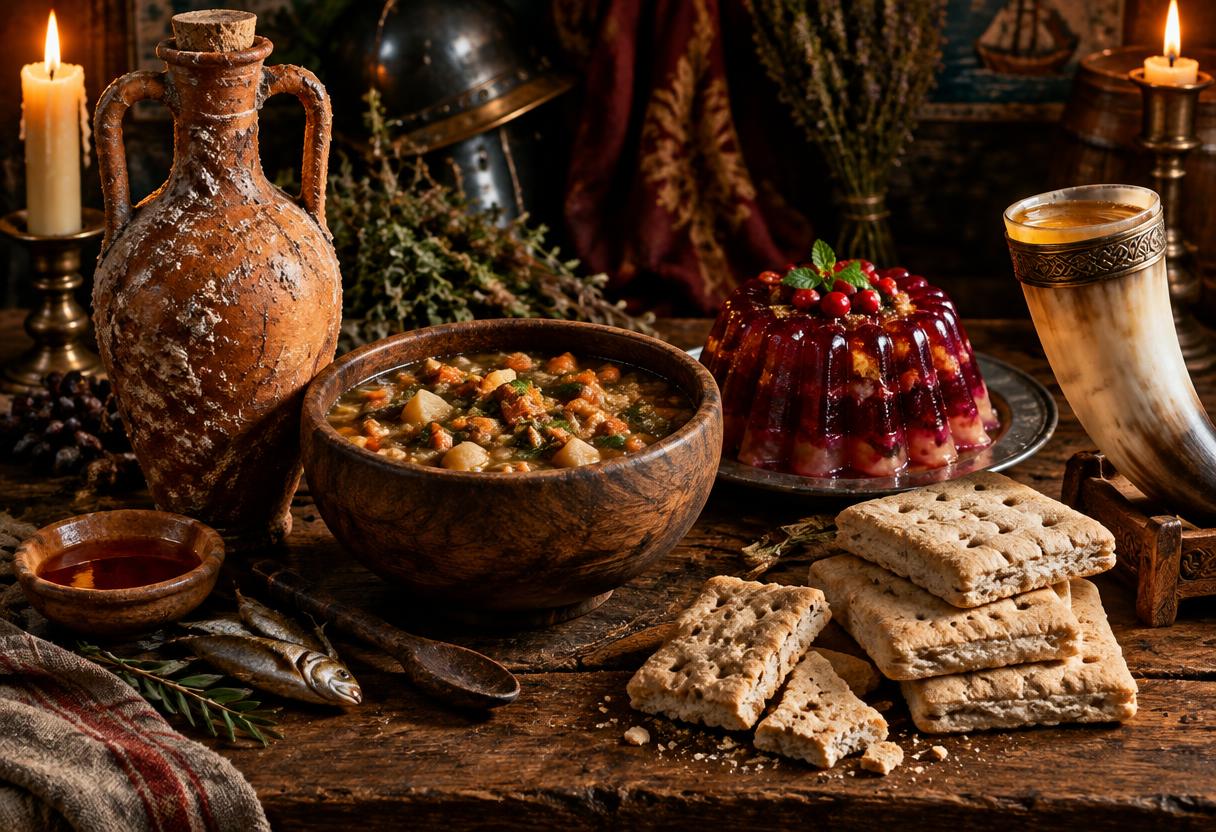
History's dinner table was a strange place. Before refrigeration, canning, and food safety laws, people ate things that sound unbelievable today — and some of them were genuinely delicious. Here's a tour of the weirdest foods our ancestors actually loved.
1. Garum — Ancient Rome's Fermented Fish Sauce
Romans put garum — a sauce of fish guts fermented in the sun for months — on absolutely everything, from bread to dessert. It was the ketchup of the ancient world, traded across the empire in clay amphorae. Modern fish sauce in Thai and Vietnamese cooking is its direct descendant.
2. Medieval Pottage — The Never-Ending Pot
Medieval peasants kept a pot of grain-and-vegetable stew simmering over the fire for days or weeks, adding whatever was available each day and scooping out meals. Perpetual stew, as it's known, is still kept going in some restaurants today — one Bangkok restaurant's soup has been simmering for over 45 years.
3. Hardtack — The Biscuit That Outlived Sailors
Flour, water, and salt baked into rock-hard slabs, hardtack fed sailors and soldiers for centuries. It could survive decades without spoiling — pieces from the American Civil War still exist in museums. Eating it required soaking it in coffee, soup, or brine, and picking out the occasional weevil.
4. Ambergris — Whale Secretion as a Delicacy
In the 17th and 18th centuries, ambergris — a waxy substance produced in the digestive system of sperm whales — was a luxury ingredient in European court cuisine and drinks, prized for its musky flavor. It was worth more than gold. Today it's mostly used (synthetically replaced) in perfumery.
5. Victorian Savory Jellies
Before gelatin desserts were sweet, Victorians loved savory aspic: meats, vegetables, and even whole fish suspended in meat-flavored jelly. Elaborate molded jellies were the centerpiece of fancy dinners — a status symbol showing you could afford gelatin and ice.
6. Small Beer — Breakfast Ale for the Whole Family
For centuries in Europe, water was often unsafe to drink, so everyone — including children — drank 'small beer,' a very low-alcohol brew, with breakfast and throughout the day. Brewing killed the pathogens. It was hydration, not indulgence.
7. Roman Dormice — A Luxury Snack
Wealthy Romans fattened dormice in special clay jars (gliraria), feeding them walnuts and chestnuts, then roasted them stuffed with pork, pine nuts, and herbs as a banquet delicacy. It was so extravagant that Roman law briefly banned serving it.
8. Coffin Bread and Other Colonial Curiosities
Early American colonists baked 'coffin pies' — thick, hard pastry shells (called coffins) designed as disposable cooking containers, not for eating. The crust was a storage vessel; the filling was the meal. The word had nothing to do with funerals — it meant 'box.'
9. Sumerian Beer Soup
One of the oldest recipes in the world, from ancient Mesopotamia, is essentially a thick beer brewed from bread — drunk through straws from communal jars. Beer was so central to life that workers were paid in it, and it was safer than the local water.
10. Aztec Spirulina Cakes
The Aztecs harvested blue-green algae (spirulina) from Lake Texcoco and dried it into protein-rich cakes called tecuitlatl. Centuries later, spirulina was rediscovered as a 'modern superfood' — the Aztecs were eating it in smoothies' ancestor all along.
🍽️ Taste It in a Recipe
Ready to cook? Try these recipes that put this article's advice on your plate:
🎉 Loved it? Share this recipe!